
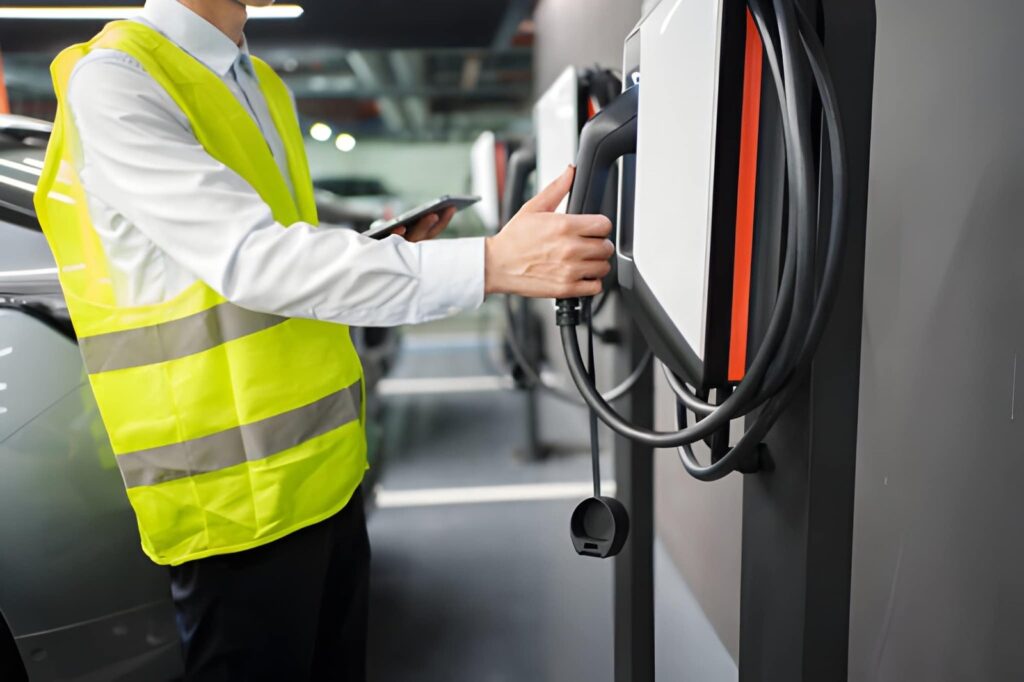
EV charging installation for business Manchester is rapidly becoming a priority for commercial property owners across the UK. With electric vehicles becoming more common, organisations must provide practical charging options for employees, customers and visitors. Businesses that install EV charging infrastructure today position themselves as forward-thinking, environmentally responsible and ready for the future of transport.
The shift towards electric mobility is supported by government incentives, improved vehicle technology and increasing environmental awareness. Many companies now view EV charging not only as a sustainability measure but also as a strategic investment in property value and customer convenience. Providers such as GreenSky Renewables help businesses install efficient and scalable charging systems tailored to their property requirements.
Modern workplaces and commercial spaces are evolving to meet the expectations of electric vehicle drivers. Whether it is an office complex, retail park, hotel or industrial facility, accessible charging stations are becoming a standard amenity.
For organisations looking for EV charging installation for business Manchester, reliable infrastructure ensures employees and visitors can charge vehicles easily during their daily routines. In many cases, workplace charging is more convenient than relying solely on public networks.
The Rise of Electric Vehicles in the UK
Electric vehicle adoption in the UK has increased significantly over the past decade. Government policies encourage businesses and consumers to reduce carbon emissions and move away from petrol and diesel vehicles.
Several factors are driving this transition:
- Expansion of public charging networks
- Falling battery costs
- Government incentives and grants
- Corporate sustainability goals
- Increased environmental awareness
According to UK transport data, electric vehicles now represent a growing percentage of new car registrations. As adoption rises, businesses must adapt their infrastructure to accommodate charging demand.
Commercial properties with EV chargers offer a competitive advantage. Customers are more likely to visit locations where they can conveniently charge their vehicles while shopping, dining or attending appointments.
Why Businesses Need EV Charging Infrastructure
Businesses across the UK are recognising the long-term benefits of installing commercial EV chargers. Providing charging facilities demonstrates environmental responsibility while improving convenience for customers and staff.
Key benefits for commercial properties
- Attracting Customers
Retail centres, restaurants and hotels benefit from attracting EV drivers who prefer destinations with charging facilities.
- Supporting Employees
Workplace charging allows staff to charge vehicles during working hours. This is particularly useful for employees with longer commutes.
- Increasing Property Value
Commercial buildings equipped with EV chargers become more attractive to tenants and investors.
- Meeting Sustainability Goals
Many organisations have carbon reduction targets. EV charging infrastructure helps support these environmental commitments.
- Future-Proofing the Business
As electric vehicle ownership grows, charging infrastructure will become a standard expectation rather than a luxury feature.
Types of Commercial EV Charging Solutions
Commercial properties can choose from several types of charging systems depending on their needs and available electrical capacity.
Charger Type | Charging Speed | Best For | Typical Locations |
Slow Chargers (3–7 kW) | 6–12 hours | Employee parking | Office buildings |
Fast Chargers (7–22 kW) | 3–4 hours | Workplace charging | Retail parks, hotels |
Rapid Chargers (50 kW+) | 30–60 minutes | High traffic areas | Service stations |
Ultra-Rapid Chargers (100 kW+) | 15–30 minutes | Motorways | Logistics hubs |
Choosing the right charger depends on factors such as parking duration, electrical capacity and business goals.
For example, offices often install slower chargers because employees park for several hours. Retail sites may choose faster chargers so customers can charge during short visits.
Workplace EV Charging Installation
Workplace EV charging installation is one of the most common solutions for businesses adopting electric mobility infrastructure. Offices, corporate campuses and industrial sites increasingly install chargers to support employee vehicles.
Providing workplace charging delivers several advantages.
Employees who drive electric vehicles can recharge while they work. This reduces reliance on public charging stations and makes EV ownership more practical. Businesses also demonstrate environmental leadership, which can help attract environmentally conscious employees.
Many companies integrate charging systems with smart management software. This allows organisations to control access, monitor usage and manage energy consumption efficiently.
Workplace chargers can also support company fleets. Businesses transitioning to electric vans or cars benefit from reliable overnight or daytime charging at their premises.
Choosing the Right EV Charger Installation Company
Selecting the right EV charger installation company is essential for ensuring a reliable and compliant charging system.
Professional installers conduct a detailed site assessment before installation. This includes evaluating electrical capacity, parking layout and charging demand.
Key considerations when choosing an installer include:
- Industry experience and certifications
- Compliance with UK safety standards
- Ability to install scalable systems
- Ongoing maintenance and support
- Smart charging and monitoring solutions
Experienced installers help businesses design charging infrastructure that can expand as demand increases. This ensures companies avoid costly upgrades later.
Understanding the EV Charger Installation Process
Installing commercial EV chargers involves several important stages. Understanding the process helps businesses prepare for a smooth installation.
1. Site Assessment
Engineers evaluate the property to determine electrical capacity, charger locations and installation requirements.
2. System Design
The installation team designs a charging system that meets business needs while complying with safety regulations.
3. Electrical Upgrades
Some sites require upgrades to electrical infrastructure to support additional power demand.
4. Installation and Testing
Technicians install chargers, configure smart systems and test the equipment to ensure everything works safely.
5. Ongoing Maintenance
Regular servicing keeps chargers operating efficiently and prevents downtime.
Smart Charging Technology for Commercial Properties
Modern electric vehicle charger installation projects often include smart technology. Smart charging systems optimise energy usage and allow businesses to monitor charger performance.
Key features include:
- Remote monitoring and management
- Energy consumption tracking
- Payment integration for public charging
- Load balancing to prevent power overload
- User authentication for employees or customers
Smart systems make it easier for businesses to control costs and ensure chargers operate efficiently.
For instance, load balancing technology distributes electricity across multiple chargers so that the building’s power supply remains stable.
Government Grants and Incentives
The UK government offers several incentives to encourage businesses to install EV charging infrastructure.
These schemes help reduce installation costs and accelerate the transition to electric mobility.
One of the most popular programmes is the Workplace Charging Scheme. It provides financial support to organisations installing EV chargers at their premises.
Businesses may also benefit from tax incentives or local funding programmes depending on their location.
Government support plays a significant role in helping businesses adopt EV charging infrastructure sooner rather than later.
Industries Benefiting from Commercial EV Charging
Many sectors are installing EV chargers to improve customer experience and support sustainability goals.
Retail and Shopping Centres
Retail parks benefit from chargers because customers often stay for an hour or more while shopping.
Hotels and Hospitality
Hotels offering EV charging attract environmentally conscious travellers.
Office Buildings
Office complexes support employees and corporate fleets through workplace charging.
Healthcare Facilities
Hospitals and clinics install chargers for staff and visitors.
Logistics and Industrial Sites
Distribution centres increasingly use EV chargers to support electric delivery fleets.
Across these sectors, EV charging infrastructure enhances convenience and supports the transition to electric transport.
Future of EV Charging in the UK
The UK government plans to ban the sale of new petrol and diesel cars by 2035. This policy will significantly accelerate electric vehicle adoption.
As EV ownership rises, commercial charging infrastructure will become essential.
Businesses that invest in EV charging today will benefit from:
- Increased property value
- Greater customer attraction
- Stronger sustainability reputation
- Future-ready infrastructure
Commercial properties that fail to adopt EV charging risk falling behind competitors who offer modern facilities.
Conclusion
EV charging infrastructure is becoming a critical feature for commercial properties throughout the UK. As electric vehicles continue to grow in popularity, businesses must provide reliable charging solutions for employees, customers and fleets.
From office buildings to retail parks, commercial EV chargers help organisations improve sustainability while enhancing customer experience. With the right planning and installation partner, businesses can deploy scalable systems that support long-term growth.
Investing in EV charging infrastructure today prepares commercial properties for the future of transport while delivering immediate operational benefits.
For professional consultation and installation support, Contact Us today.
FAQs
1. Why should businesses install EV charging stations?
Businesses install EV chargers to support employees, attract customers and improve sustainability. Charging facilities also increase property value and future-proof commercial locations.
2. How long does EV charger installation take?
Most commercial installations take a few days to complete, depending on site size and electrical infrastructure requirements.
3. Are government grants available for workplace EV charging?
Yes. The UK government offers programmes such as the Workplace Charging Scheme, which helps businesses reduce installation costs.
4. What types of chargers are best for commercial properties?
Fast chargers (7–22 kW) are common for workplaces and retail locations because they balance charging speed with electrical efficiency.
5. Can businesses charge customers for using EV chargers?
Yes. Many smart charging systems allow businesses to set payment rates or provide free charging as a customer incentive.