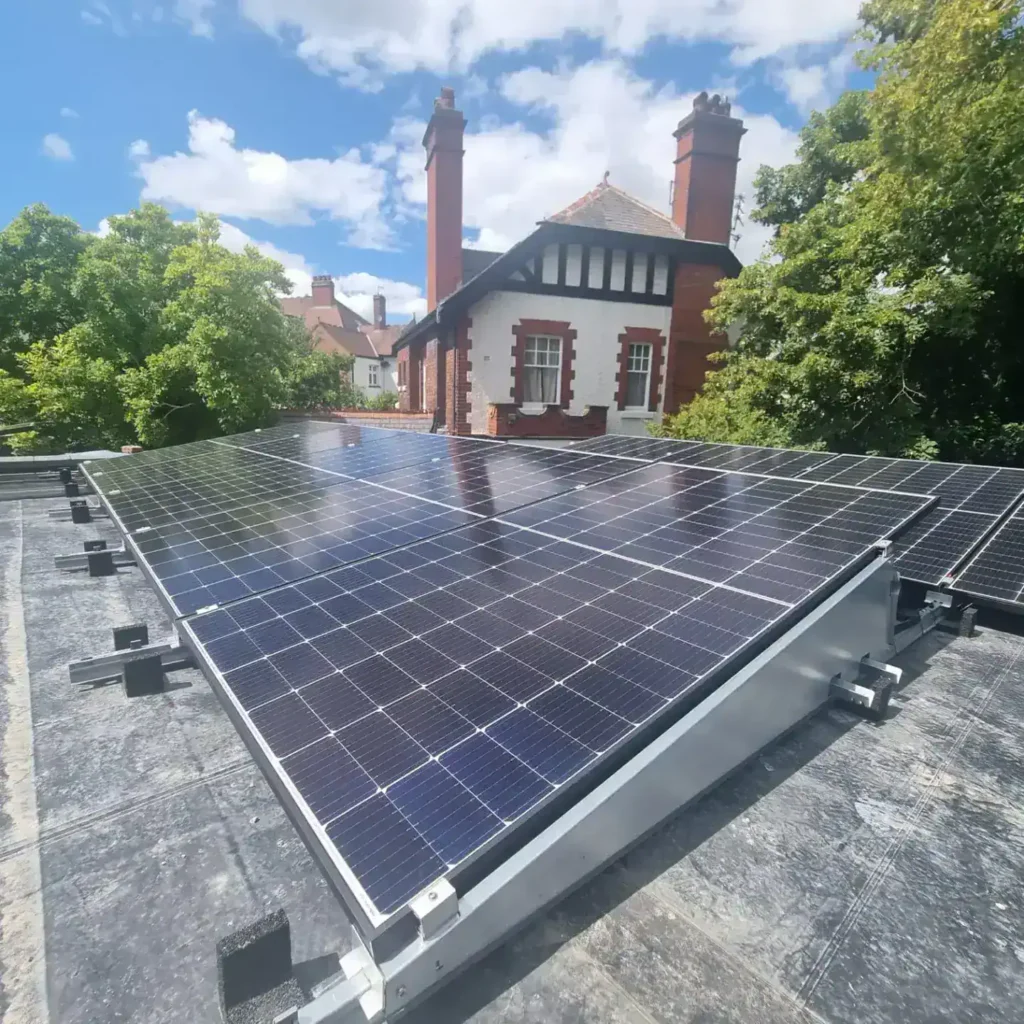
When considering a solar photovoltaic (PV) system for your home or property, it is essential to ensure that both the products and the installation meet established quality standards. In the UK, the Microgeneration Certification Scheme (MCS) serves as the benchmark for such standards in small-scale renewable energy installations, including solar PV systems.
What is MCS Certification?
The Microgeneration Certification Scheme (MCS) is an industry-led quality assurance programme supported by the Department for Business, Energy & Industrial Strategy. It certifies both renewable energy products and the installers who fit them, ensuring that installations are safe, dependable, and perform as expected.
MCS certification covers various renewable technologies, including:
- Solar photovoltaic (PV) panels
- Heat pumps
- Wind turbines
- Biomass systems
By choosing MCS-certified products and installers, consumers can have confidence in the quality and performance of their renewable energy systems.
Why MCS Certification Matters
1. Quality Assurance
MCS certification ensures that:
- Products meet rigorous testing and performance standards.
- Installers adhere to strict installation guidelines and best practices.
This dual certification guarantees that the entire system—from components to installation—is of high quality.
2. Access to Financial Incentives
Many government-backed financial incentives and schemes require MCS certification. For instance:
- Smart Export Guarantee (SEG): To receive payments for excess electricity exported to the grid, your system must be installed by an MCS-certified installer using MCS-certified products.
Without MCS certification, you may be ineligible for such benefits.
3. Consumer Protection
MCS-certified installations come with consumer protection measures, including:
- Warranties: Assurance that products and workmanship are covered.
- Complaint Resolution: Access to a clear process for addressing issues.
These protections provide peace of mind and recourse in case of problems.
4. Compliance with Building Regulations
MCS-certified installations are more likely to comply with local building regulations and standards, reducing the risk of non-compliance issues.
How to Verify MCS Certification
Before proceeding with a solar installation:
- Check Installer Certification:
- Visit the MCS website to verify that your chosen installer is certified.
- Confirm Product Certification:
- Ensure that the solar panels and other components are listed as MCS-certified products.
- Obtain an MCS Certificate:
- After installation, you should receive an MCS certificate confirming that the system meets the required standards.
Green Sky Renewables: Your MCS-Certified Partner
At Green Sky Renewables, we pride ourselves on delivering high-quality solar installations that meet and exceed industry standards. As an MCS-certified installer, we ensure that:
- Products: We use only MCS-certified solar panels and components.
- Installation: Our team follows best practices to guarantee optimal system performance.
- Customer Support: We provide comprehensive support, from initial consultation to post-installation service.
By choosing Green Sky Renewables, you are partnering with a trusted provider committed to excellence in renewable energy solutions.
Conclusion
MCS certification is more than just a mark of quality; it is a crucial factor in ensuring the safety, performance, and financial viability of your solar installation. Whether you are a homeowner looking to reduce energy bills or a landlord aiming to improve property efficiency, choosing MCS-certified products and installers is a smart investment in your property’s future.
For more information or to schedule a consultation, contact Green Sky Renewables today.